The Solo Tradesperson's Guide to Not Burning Out
Sep 23, 2026 · 6 min read

When you're the owner, the crew, and the admin department, burnout isn't a risk — it's the default setting. Here's what actually causes it, and what to change first.
Nobody warns you, when you go solo, that the hardest part usually isn't the actual trade work. You already know how to do the job — that's why you started the business. What wears people down is everything stacked on top of it: the estimating, the invoicing, the follow-up calls, the scheduling, the bookkeeping, all handled by the same one person who also has to show up and do the physical work every day. Burnout in a one-person shop isn't a sign you're doing something wrong. It's closer to the default outcome of the structure itself, unless something changes.
Why solo burnout looks different from a "regular job" burnout
Employee burnout usually comes from overwork within a defined role. Solo trade burnout comes from role stacking — you're not just tired from doing one job too much, you're tired from being five different jobs (technician, salesperson, bookkeeper, customer service, and business owner) with none of them getting your full attention and all of them competing for the same hours.
This matters because the fix isn't "work less" — often you genuinely can't, the jobs are the income. The fix is reducing how many roles you're mentally switching between in a given day, since context-switching itself is exhausting in a way raw hours worked isn't.
The three things that quietly drain people fastest
- Never being fully off. If your phone is also your invoicing system, your quote tool, and your customer service line, there's no boundary between "at work" and "not at work." A text at 8pm about a leaky faucet doesn't feel optional to answer, because answering it is the business.
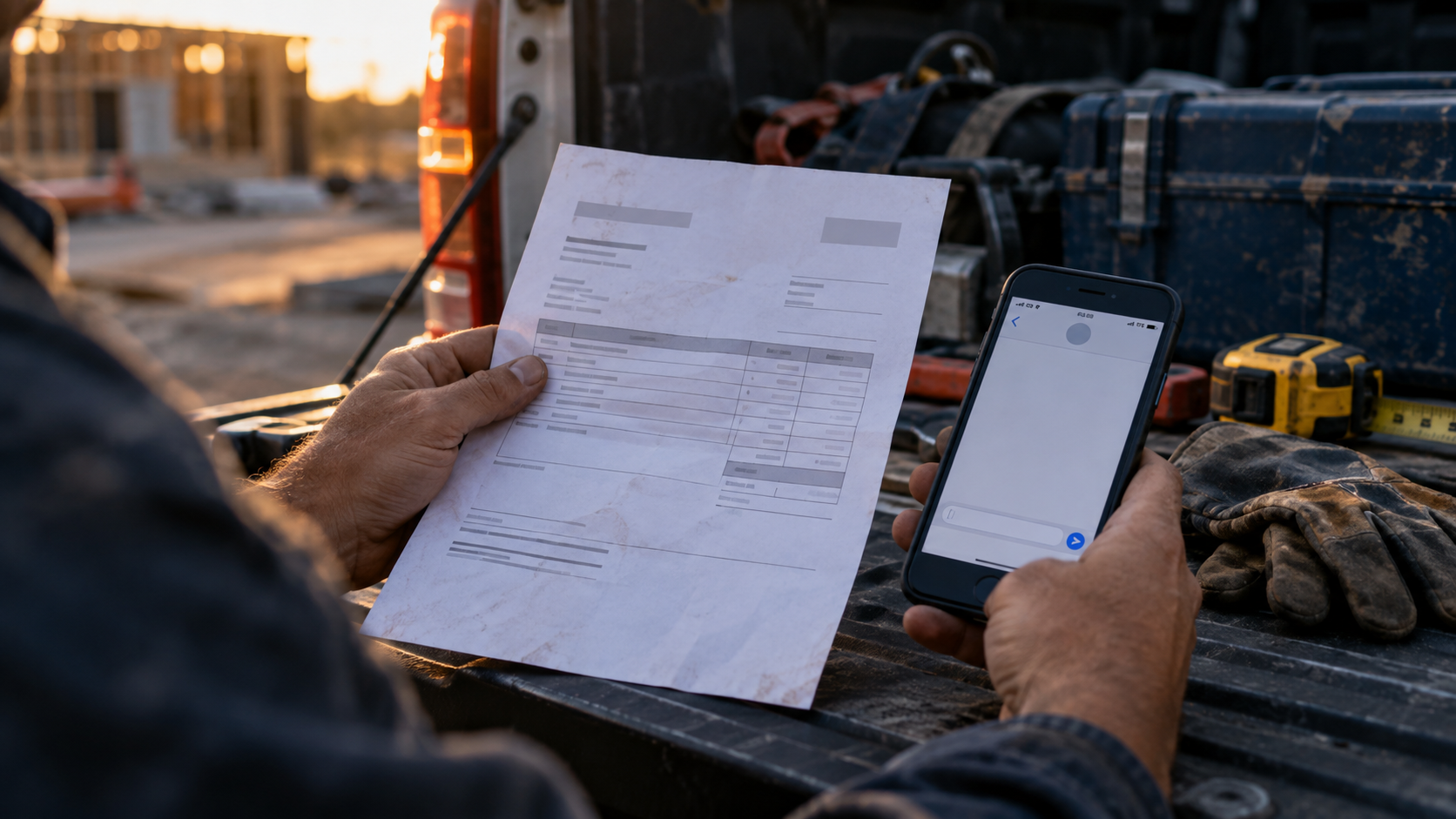
- Admin that doesn't feel like "real work." Physical labor feels productive even when it's exhausting — you can see the result. Paperwork, chasing invoices, and rescheduling feel like a tax on top of the actual job, and doing hours of it at the end of a physical day is a specific kind of draining that has nothing to do with fitness.
- Carrying every decision alone. No one to bounce a pricing call off, no one covering for you when you're sick, no one else who notices when the schedule's gotten unsustainable. Every decision, correction, and course-adjustment runs through one person.
What actually helps (and what doesn't)
"Work-life balance" advice aimed at office workers doesn't translate cleanly to a one-person trade business, because the underlying problem is different. A few things that do move the needle:
- Put a real boundary on customer contact. Not "I'll try to answer faster next time" — an actual stated window (e.g., texts get answered by end of next business day, urgent calls only after hours). Once it's stated, customers generally respect it; the anxiety was mostly self-imposed.
- Batch the admin instead of letting it interrupt the day. Handling invoicing, quotes, and follow-ups in one dedicated block — rather than reactively, throughout the day, between jobs — reduces the number of times you mentally switch out of "doing the trade" mode.
- Automate anything that's the same every time. Review requests, payment reminders, quote follow-ups — these don't need a human decision each time. If it's the same message with the same logic every time, it shouldn't require you to remember to send it.
- Actually take the day off, on purpose. Not "no jobs scheduled" — actually unreachable for a stretch. This one is the hardest and the most resisted, and also the one people report making the biggest difference once they actually do it.
The bigger shift
The businesses that avoid burnout longest aren't the ones where the owner works the fewest hours doing the trade — often they work plenty. They're the ones where the non-trade work (quoting, invoicing, follow-up, reminders) has been pulled out of the owner's head and handled by something else, so the hours that remain are actually spent on the work that's satisfying, instead of the admin that's just draining.
That's the gap Solo Sidekick is built to close — quoting, invoicing, payment collection, and review requests running on their own once you've set them up, so the parts of the job that burn people out fastest aren't riding entirely on your memory and your evenings.
Ready to stop chasing the parts of the job that aren't the job?
14-day free trial. At the end of the trial period, your card will be charged unless you cancel.
Start free trial