The Best Time to Ask for a Review (Hint: It's Not After the Invoice)
Sep 22, 2026 · 5 min read

Most review requests go out at the wrong moment — after the money's already changed hands, when the job itself has stopped being the thing on the customer's mind. Here's the window that actually works.
If you ask for a review the same moment you send the invoice, you've quietly turned a request about the work into a request that feels attached to the bill. That's a small shift, but it changes how the ask lands — and it's probably the single most common timing mistake in the trades.
Why "right after the invoice" feels off
Picture the sequence from the customer's side: the job's done, and then a message arrives that's really two asks stitched together — pay me, and also review me. Even if that's not the intent, it reads that way. The review request gets mentally filed under "business transaction" instead of "genuine reaction to the work," and reviews written from that headspace tend to be shorter, flatter, and less likely to get written at all.
There's also a practical problem: invoicing often happens administratively, sometimes by whoever handles the books, sometimes batched at the end of the day — disconnected from the actual moment the customer was standing there looking at the finished work and feeling good about it. You've separated the ask from the emotion that would have made someone want to write it.
The window that actually works
The best moment is narrower and earlier than most people assume: right when the job is visibly done, while the customer can still see it. Not after they've driven away. Not after the invoice lands in their inbox. The instant the work is finished and they're looking at the result — that's when the impression is freshest and most specific, which is exactly what makes a review worth reading instead of a generic five stars with no comment.
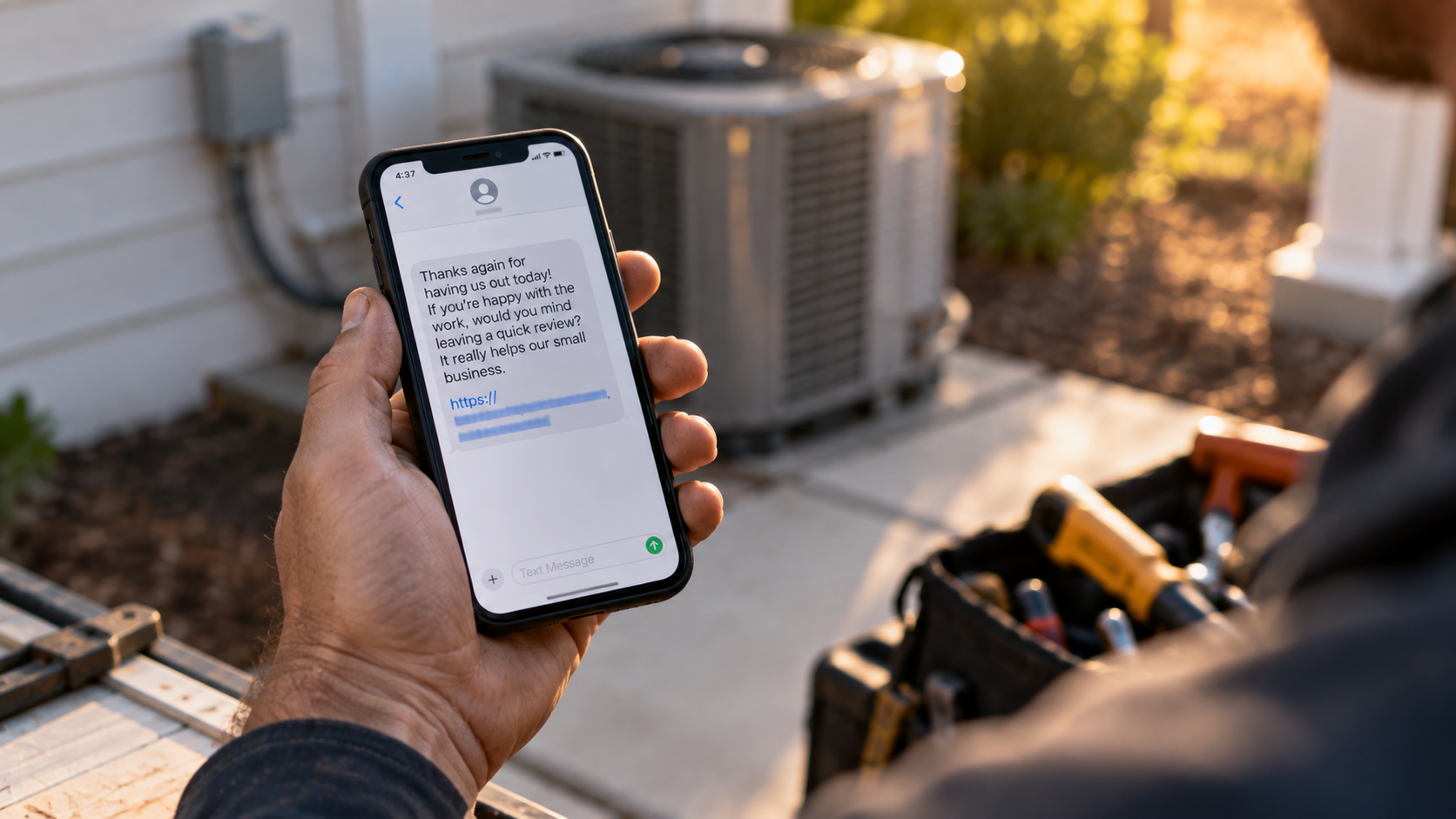
If you're standing there anyway wrapping up, that's the moment. If the job doesn't lend itself to an in-person ask (you left before they got home, it's an outdoor job they'll only really notice later), the fallback is same-day — a text sent within a few hours of completion, not a batch process that runs at 6pm for every job that happened that week.
Why separating it from payment actually helps both
Splitting the review ask from the payment ask isn't just about optics — it makes each one land better on its own:
- The payment ask stays simple and neutral. It's just the invoice, doing its one job, without an extra favor riding along with it.
- The review ask stays personal. It's about the work itself, sent at the moment the work is the thing on their mind — not buried as line three of an invoice email.
Combining them doesn't save you a step so much as it dilutes both messages into something that does neither job especially well.
What this looks like in practice
A simple sequence that keeps the two separate without adding real extra effort:
- Job wraps. If you're still there, ask in person or send the review link on the spot.
- Within a few hours (if you weren't there for the "finished" moment), a short text goes out — just the review ask, nothing else attached.
- Invoice goes out separately, on its own normal timeline, without a review request riding along.
None of this requires remembering three different moments in your head while you're also trying to pack up tools and get to the next job. It's really just a sequencing decision, made once, that then repeats the same way every time.
That's the sequence Solo Sidekick runs automatically — a review request fires the moment a job's marked complete, separate from the invoice, so the timing that actually works doesn't depend on you remembering to split the two asks on a busy day.
Ready to stop chasing the parts of the job that aren't the job?
14-day free trial. At the end of the trial period, your card will be charged unless you cancel.
Start free trial