
How to Turn One Happy Customer Into Three New Jobs
Sep 26, 2026 · 5 min read

A satisfied customer is a dead end unless you give them a reason and a way to send someone your direction. Here's how one good job turns into several.
Most solo tradespeople treat a happy customer as the finish line — job's done, they're pleased, on to the next one. That happy customer is actually a starting point, not an ending, but only if something happens after the job that turns their satisfaction into action. Left alone, satisfaction just sits there. It doesn't spread on its own.
Satisfaction doesn't automatically become word of mouth
There's a common assumption that great work markets itself — do good enough jobs, and referrals will just happen. Sometimes they do, eventually, accidentally, when a happy customer's neighbor happens to mention needing similar work. But "eventually, accidentally" isn't a growth strategy, it's luck. The tradespeople who actually get a steady stream of referral work aren't doing meaningfully better work than everyone else — they're doing something deliberate after the job that the "great work markets itself" crowd isn't.
Why customers don't refer you on their own
A customer being happy doesn't mean referring you is on their mind. They're not thinking about your business — they're thinking about their finished kitchen, their working furnace, their fixed fence. Referring you requires them to (a) think of you at the exact moment someone else mentions needing similar work, and (b) actually make the connection out loud instead of just thinking "oh, I know a guy." Step (b) is where most potential referrals quietly die — the thought crosses their mind and goes nowhere, because nothing prompted them to actually say it.
What actually turns one job into three
- Ask directly, don't wait for it to happen organically. "If you know anyone else who needs this kind of work, I'd really appreciate you passing my name along" is a simple, low-pressure line that plants the idea explicitly instead of hoping it occurs to them unprompted. Most people are happy to help someone they liked working with — they just need the nudge.
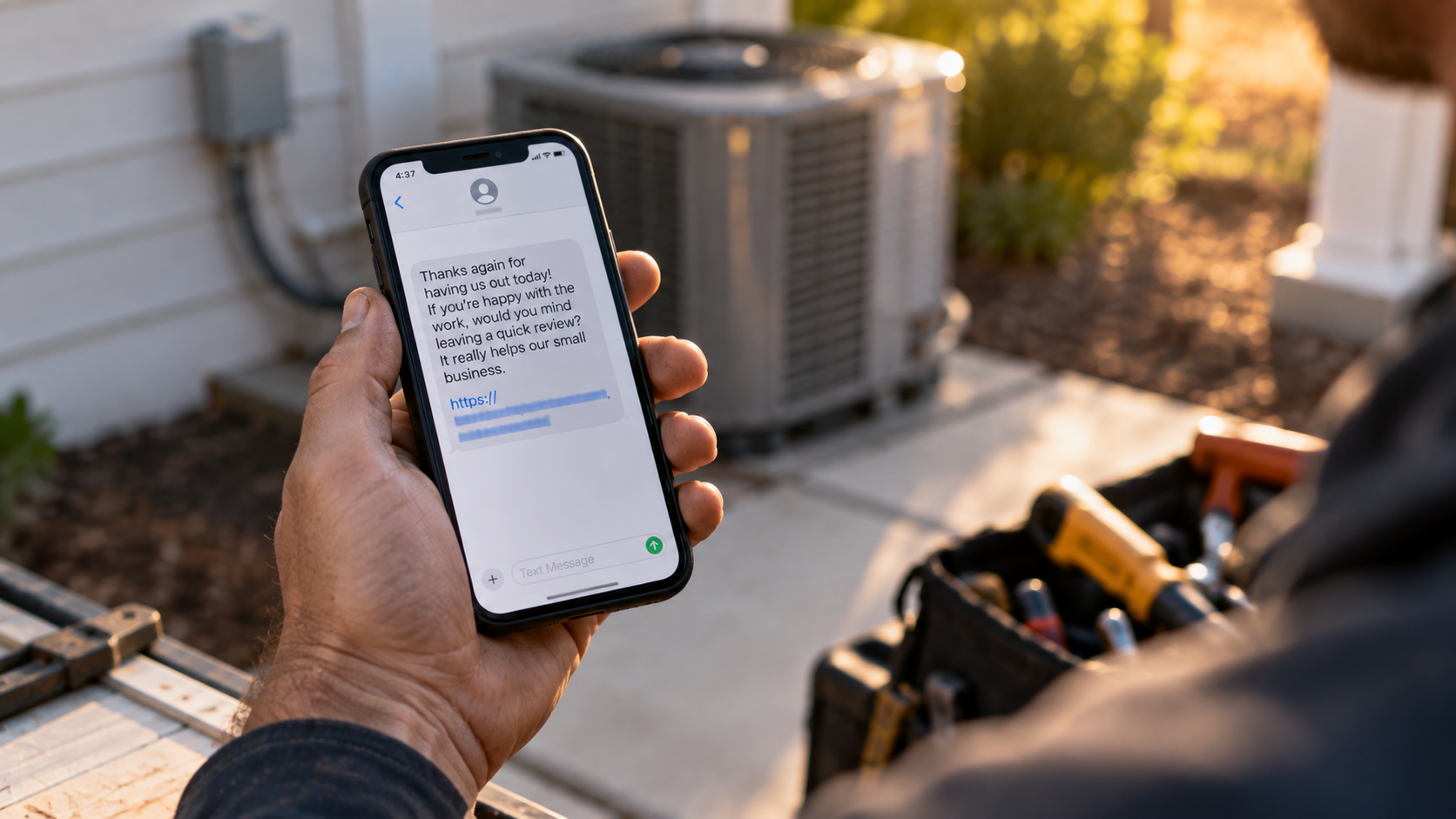
- Make it easy to actually do. A customer willing to refer you still needs a frictionless way to do it — your card, a text they can forward, a simple link. If referring you means them explaining your name and number from memory, a lot of good intentions never make it past that step.
- Give the ask a reason to happen at the right moment. The best time to ask isn't randomly — it's right when satisfaction is highest, which is usually right after the job's done and they can see the result, the same window that works for review requests. Waiting weeks means asking into a memory that's already faded.
- Consider a small incentive, but don't rely on it. A discount on their next service, or a small thank-you for a successful referral, sweetens the ask — but incentive alone doesn't create referrals if nobody's actually asked. The ask is the mechanism; the incentive is just a nice accelerant on top of it.
- Follow up on the ones that come through. When a referral actually lands, a quick thank-you back to the original customer closes the loop and reinforces that referring you was worth their while — which makes them more likely to do it again next time.
The compounding part
One customer rarely turns into three from a single ask — but a habit of asking, applied across every job, adds up fast. If even a fraction of happy customers refer one person each, and you're consistently asking across dozens of jobs a month, that's a meaningfully different growth curve than hoping word of mouth happens on its own. The math isn't about any one customer being a superfan. It's about never skipping the ask.
The through-line with reviews
This works the same way reviews do, for the same underlying reason: neither happens automatically just because you did good work. Both need a direct ask, at the right moment, made easy to act on. If you're already asking for reviews right after job completion, adding the referral ask to that same moment barely costs you anything extra — it's one more sentence in a conversation you're already having.
That's part of why Solo Sidekick's post-job follow-up includes both the review request and a simple referral prompt, sent automatically the moment a job's marked complete — so the ask happens every time, not just on the jobs where you remembered.
Ready to stop chasing the parts of the job that aren't the job?
14-day free trial. At the end of the trial period, your card will be charged unless you cancel.
Start free trialRelated reading

The Best Time to Ask for a Review (Hint: It's Not After the Invoice)
Sep 22, 2026 · 5 min read
Why Nobody Leaves You a Review (Even Happy Customers)
Sep 21, 2026 · 5 min read

How Fast Should You Send a Quote After a Walkthrough?
Sep 19, 2026 · 5 min read