How to Ask a Customer for a Deposit Without Feeling Awkward
Sep 16, 2026 · 5 min read
Asking for money up front feels personal, but it doesn't have to be. Here's how to make a deposit request feel routine instead of like a confrontation.
Somewhere along the way, a lot of tradespeople convinced themselves that asking for a deposit is an awkward conversation — something you brace for, like negotiating a raise. It isn't, and it doesn't have to feel that way. The discomfort usually isn't coming from the customer. It's coming from you.
Why it feels awkward in the first place
If you've never asked for a deposit before, the first time feels like a big deal because you're treating it like one. You're worried it'll come across as not trusting the customer, or that they'll think you're hurting for cash, or that it'll cost you the job entirely.
None of that tracks with how customers actually experience it. A deposit is standard in nearly every service industry a homeowner interacts with — contractors, caterers, photographers, even the guy who details their car for a big event. Nobody bats an eye at a wedding photographer asking for half down. The awkwardness isn't the ask. It's you apologizing for the ask before anyone's had a reaction to it.
It's a business term, not a personal favor
The fastest way to remove the discomfort is to stop framing the deposit as something you're asking of someone, and start framing it as something that's simply how the job works. Compare these two:
- "So, um, I hate to ask, but would it be okay if I got like half up front? I know it's kind of a lot to ask, but materials are expensive right now..."
- "For a job this size, I collect a 30% deposit to order materials, with the balance due on completion. I'll send that over along with the quote."
The first one invites a negotiation. The second one is just a fact about how you operate — delivered the same way you'd mention your hours or your service area. Customers take their emotional cue from you. If you present it like a routine policy, it lands like one.
Say it before they ask you to
The single biggest thing that removes awkwardness: mention the deposit before the customer has any reason to wonder about it — ideally the moment you send the quote, not after they've said yes and you're both standing in the driveway. When it's baked into your normal process from the first conversation, it stops being a request and starts being a term, like a delivery date.
Waiting until the job is scheduled to bring it up is what makes it feel like a last-minute add-on — and that's when customers start to wonder what changed.
What to actually say
A few scripts that work well across almost any trade, adjusted to your voice:
- In the quote itself: "This quote includes a 25% deposit to secure your spot on the schedule and cover material costs, with the remainder due upon completion."
- On a call, if they ask why: "It just lets me lock in your materials and hold the date — pretty standard for jobs this size."
- If a customer pushes back: "I get it — I keep it simple: a portion up front, the rest when the work's done and you're happy with it. That protects us both."
Notice none of these apologize, over-explain, or ask permission. They state the term and move on.
If someone says no
Occasionally someone will resist. That's useful information, not a crisis. A customer who won't put down a deposit for a legitimate job is often the same customer who'll be slow — or difficult — about the final payment too. You're not obligated to take every job that comes with resistance at step one.
Make the collection itself effortless
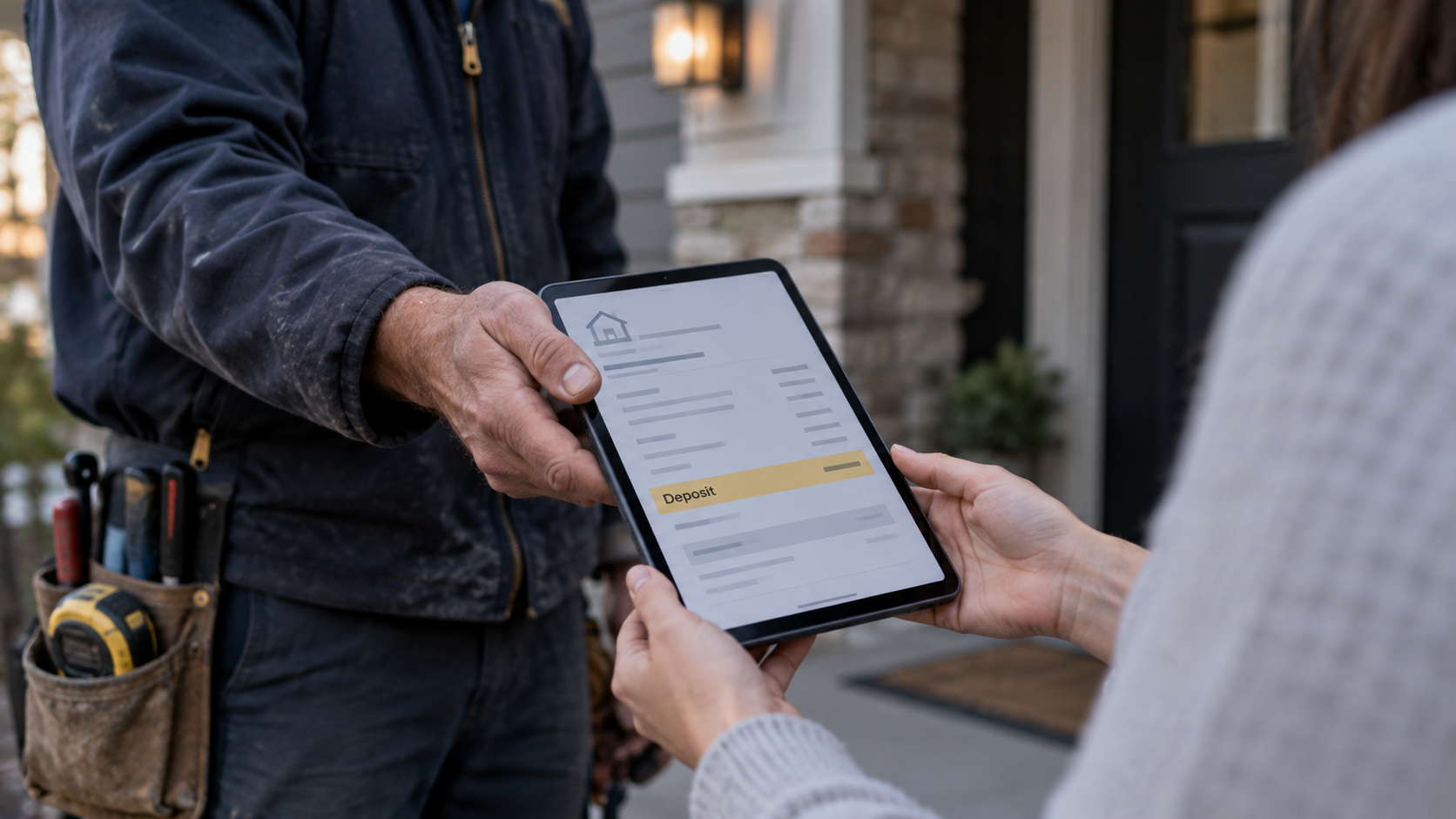
Once you've got the deposit request framed right, the actual collection should be just as frictionless — a link they tap from the same text or email as the quote, not a separate awkward follow-up. The more automatic that step is, the less it ever feels like a conversation at all.
That's the piece Solo Sidekick handles by default: deposit terms are built into every quote, and the payment link goes out automatically, so asking for money up front never has to be its own moment — it's just part of how the quote works.
Ready to stop chasing the parts of the job that aren't the job?
14-day free trial. At the end of the trial period, your card will be charged unless you cancel.
Start free trial