How to Follow Up on an Estimate Without Being Annoying (Scripts)
Sep 28, 2026 · 5 min read

A good follow-up recovers stalled quotes. A bad one makes you look desperate. Here's exactly what to say, and when to say it.
There's a version of following up that feels like nagging, and a version that feels like good customer service — and the difference isn't whether you follow up, it's how. Plenty of tradespeople avoid following up entirely because they're worried about coming across as pushy, and end up losing jobs they would have won with one well-timed text. We covered why quotes go quiet in the first place in an earlier post — this one is about the actual words to use once you've decided to check back in.
The mindset shift that makes this easier
Following up isn't asking for a favor. It's providing a service the customer probably wants — a reminder, at a moment they're likely to appreciate it, about a decision they already meant to make. Framed that way, a follow-up isn't an imposition. It's you doing the remembering they didn't have time to do themselves.
The cadence that works
First follow-up: 2–3 days after sending the quote. Early enough that the job's still fresh in their mind, late enough that you're not following up before they've had a real chance to look at it.
Second follow-up: 5–7 days after the first, if you haven't heard back. This one carries a little more information — a gentle nudge toward a decision, not just a repeat of the same message.
Third and final: around day 10–14, especially if the quote has an expiration date. This is the "closing the loop" message — either they decide now, or you both move on.
Beyond that third message, stop. Continuing to follow up past this point is where "helpful reminder" tips into "annoying," and it rarely recovers a job that three attempts didn't.
The actual scripts
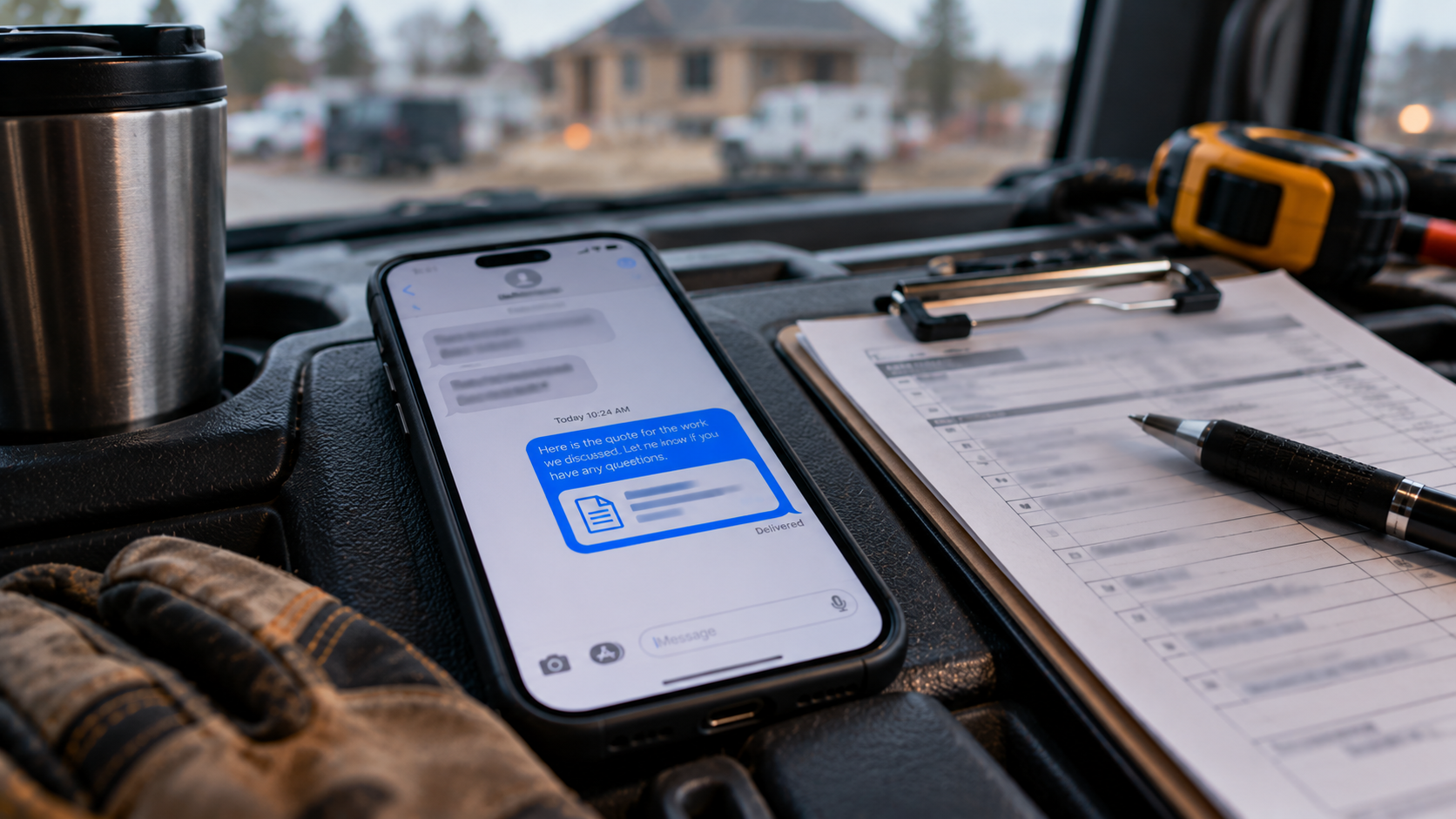
First follow-up (text, 2–3 days out): "Hi [Name], just checking you got the quote I sent over for [job]. Happy to answer any questions — let me know if you'd like to move forward."
Short, no pressure, easy to respond to with a single word.
Second follow-up (text or call, 5–7 days later): "Hey [Name], following up on the [job] quote — still available if you'd like to get it scheduled. I do have limited openings the next couple weeks if timing matters."
This version adds a light, honest reason to decide now (real availability, not manufactured urgency) without pushing.
Third and final follow-up (text, day 10–14): "Hi [Name], wanted to check in one more time on the [job] quote before it expires on [date]. No worries either way — just let me know if you'd like to move forward or if your plans have changed."
This one explicitly gives them permission to say no, which — counterintuitively — often gets more responses than a message that only asks for a yes. It closes the loop cleanly either way.
What to avoid
A few things that tip a reasonable follow-up into an annoying one:
- More than three total touches. Beyond that, you're not reminding anymore, you're pestering.
- Guilt or pressure language ("just following up again..." said with an edge, or "I really need to know soon"). It reads as impatience, not professionalism.
- Calling when a text would do. A call feels like a bigger ask — save it for the second follow-up if you haven't heard anything at all.
- Following up with no new information. Repeating the exact same message three times in a row feels robotic even when it's well-intentioned. Each touch should add something small — availability, a deadline, an easy yes/no.
Why this recovers more jobs than it costs you
A lot of tradespeople worry that following up will annoy a customer into choosing someone else. In practice, the opposite is usually true: customers regularly forget to respond, mean to get back to you, or need a nudge to actually make the decision — that's the whole reason quotes go quiet in the first place. A well-timed, low-pressure follow-up recovers far more jobs than it loses, and the ones it does lose were rarely going to say yes anyway.
Making it automatic
The hardest part of this isn't knowing what to say — it's remembering to actually send it on day 2, day 7, and day 12 while you're also running a full schedule of real jobs. That's the piece most solo tradespeople drop, not because the scripts are hard, but because remembering the calendar is.
That's why Solo Sidekick fires these follow-ups automatically on a set schedule once a quote's been sent — so recovering a stalled quote doesn't depend on you remembering three separate dates in the middle of a busy week.
Ready to stop chasing the parts of the job that aren't the job?
14-day free trial. At the end of the trial period, your card will be charged unless you cancel.
Start free trial