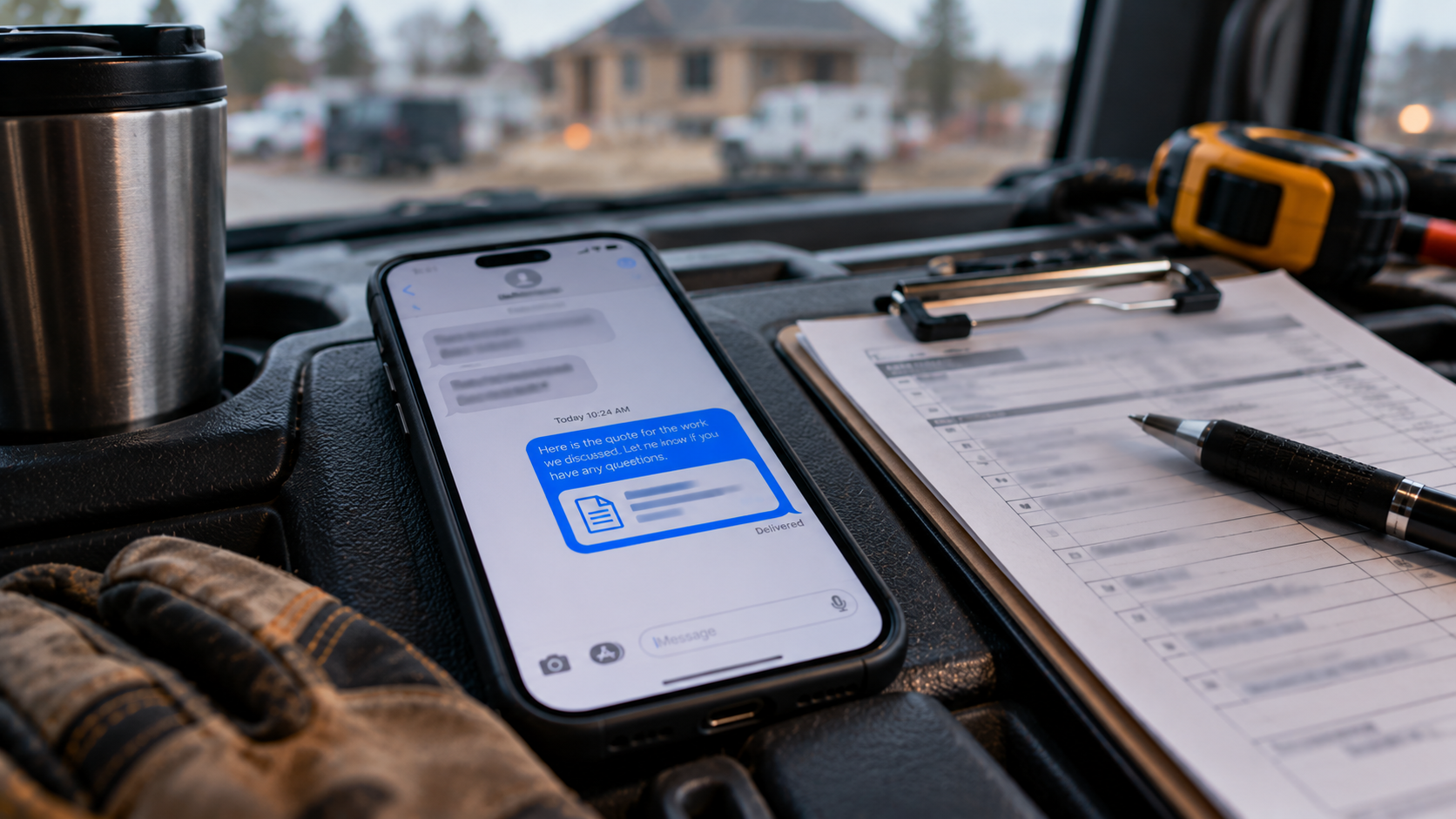
How to Quote a Job You've Never Done Before
Sep 28, 2026 · 6 min read

A job outside your usual scope shouldn't mean guessing blind or walking away from good money. Here's how to build a number you can actually stand behind.
Every tradesperson eventually gets the call for something slightly outside their normal lane — a panel upgrade you haven't done in this exact configuration, a system type you've installed once, not fifty times. The instinct is either to pad the number heavily out of fear, or lowball it because you're not confident enough to defend a higher price. Neither is a strategy. There's a better way to build a quote for unfamiliar work that doesn't leave you exposed.
Why this situation is riskier than a familiar job
On a job you've done a hundred times, your pricing is basically muscle memory — you know the materials, the time, the things that tend to go wrong. On unfamiliar work, all of that uncertainty is real, and it's exactly the kind of uncertainty that turns a profitable job into a break-even one if you're not deliberate about pricing for it. The goal isn't to eliminate the uncertainty — you can't, not on a first-time job. It's to price it honestly instead of ignoring it.
Step 1: Separate what you know from what you don't
Before pricing anything, break the job into two lists: the parts that are genuinely familiar (even if the overall job isn't) and the parts that are new territory. A panel upgrade you've never done might still involve wiring techniques, code requirements, and material types you know cold — the "new" part might just be the specific configuration or a component you haven't installed before. Pricing the whole job as if it's equally unfamiliar top to bottom usually overstates the actual risk.
Step 2: Research before you price, not after you've committed
A few sources are worth checking before locking in a number:
- Manufacturer specs and install guides, if the job involves specific equipment — they'll tell you labor time estimates and material requirements more reliably than a guess.
- Trade forums and communities (contractor-specific subreddits and forums are genuinely useful here) — searching for others who've done a similar job surfaces real gotchas, typical time-on-task, and pricing ranges other tradespeople have actually seen, not theoretical numbers.
- A quick call to a supplier or distributor you already have a relationship with — they often know rough material costs and common complications for a given job type better than a general online search.
- A peer in your trade, if you have one — a five-minute call asking "have you done one of these, what should I watch for" is worth more than an hour of solo research.
Step 3: Price in a buffer for the unknown, explicitly
This is the step people skip, usually out of a fear that padding the price looks like overcharging. It isn't — it's honest risk pricing. A job with real unknowns should carry a bigger buffer than a routine one, typically somewhere in the 15–25% range on labor, depending on how much of the job is genuinely unfamiliar versus adjacent-to-familiar. The buffer isn't inflating the price arbitrarily; it's pricing in the real chance that this job takes longer or needs more material than a job you've quoted fifty times before.
Step 4: Decide how to frame it to the customer
You don't need to announce "I've never done this exact job" — that undersells your actual competence on the adjacent skills you do have. But you also shouldn't quote it with false certainty if there's real chance the scope shifts once you're inside the wall or the unit. A middle path that works well:
- Quote a firm number for the parts you're confident on.
- Flag the genuinely uncertain part as a range or a "pending inspection" line, with a plan for how you'll firm it up (e.g., "final number confirmed once I can access the panel").
This is honest without being alarming, and it protects you from eating a cost overrun on the part of the job that was always the wildcard.
Step 5: Treat the first one as a data point, not the final answer
The first time you quote and complete an unfamiliar job type, track what you actually estimated versus what it actually took — time, materials, complications. That gap is exactly what makes the second time you quote this job type dramatically more accurate than the first. Unfamiliar work only stays unfamiliar once.
The bigger principle
Turning down every job outside your comfort zone shrinks your business over time. Guessing blind on unfamiliar work erodes your margins and your confidence. The actual answer sits between those two: research enough to price with real information, buffer honestly for what you still don't know, and be transparent with the customer about which parts of the number are solid and which parts might shift. That's not a weaker quote than a confident guess — it's a stronger one, because it's actually defensible if the job doesn't go exactly as planned.
That's part of why Solo Sidekick's quote builder supports line-item notes and range pricing on individual items, not just a single locked total — so quoting something new doesn't force a choice between a false-confidence number and turning the job down.
- Electrician
- HVAC
Ready to stop chasing the parts of the job that aren't the job?
14-day free trial. At the end of the trial period, your card will be charged unless you cancel.
Start free trial