
The 15-Minute End-of-Day Admin Routine (Stop Doing Paperwork at Night)
Paperwork at night is what makes a long day longer. Here's a 15-minute routine you can finish before you walk in the door, so the evening stays yours.
Austin
Founder, Solo Sidekick
Oct 21, 2026 · 5 min read
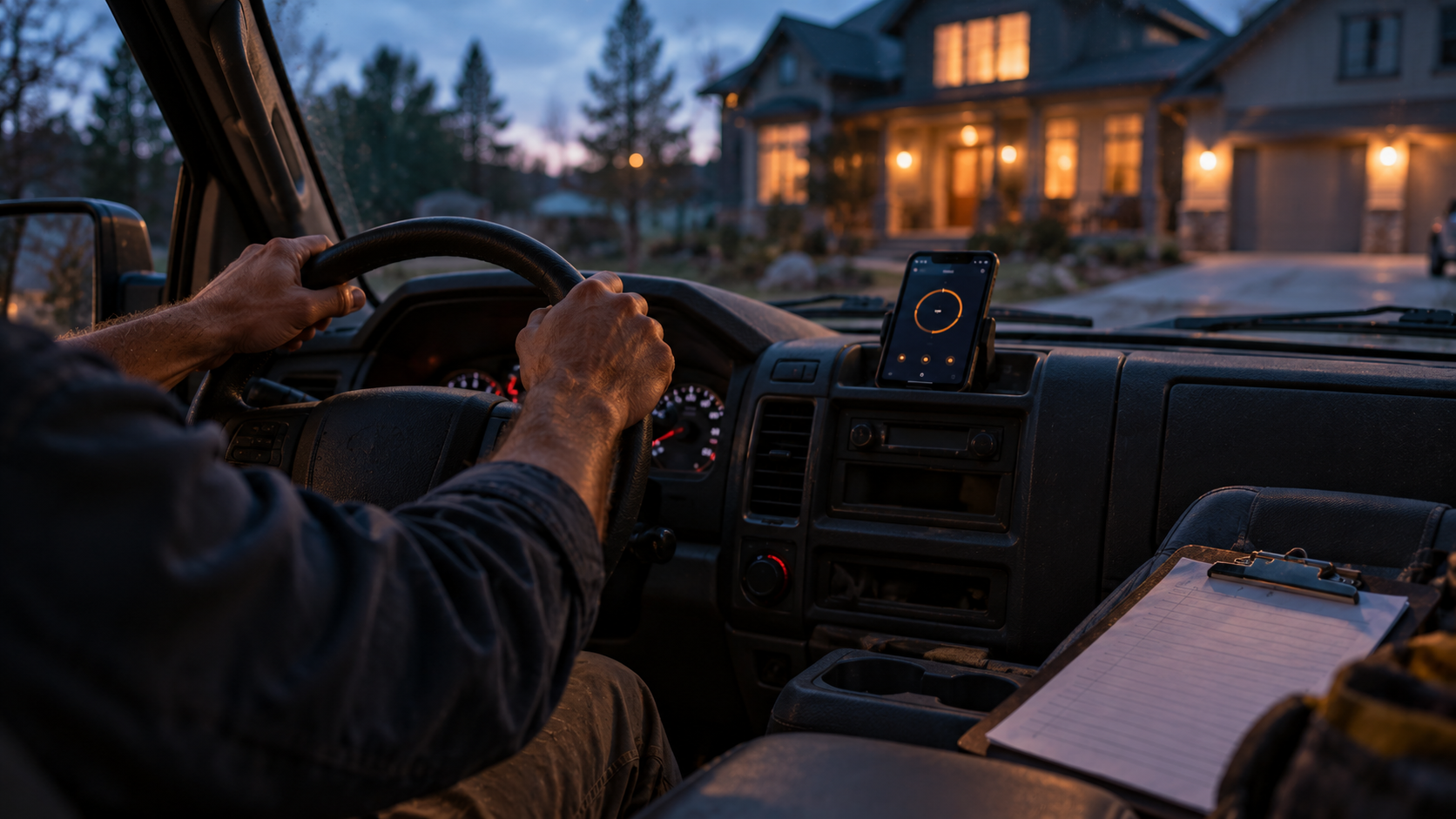
You finish the last job, drive home, eat dinner, and then sit down at the kitchen table to deal with the day's paperwork. Quotes to send, an invoice to write, a receipt you meant to photograph. It's rarely a big task. It's just the one that turns a long day into a longer one, and it's a major reason so many solo operators feel worn down, as we covered in the solo tradesperson's guide to not burning out. A short, fixed routine at the end of the workday can take most of that off your evening.
Why the evening is the worst time for paperwork
By the time you sit down at night, you're tired, the details of the day are fuzzy, and the work has had hours to pile up. Details get lost, small tasks get postponed, and a ten-minute job becomes an hour. This is the "paperwork tail" we described in how many jobs one person can actually handle in a week: it doesn't happen during the job, it happens around it, and it competes with the rest of your life.
Doing it earlier fixes two things at once. You're working from fresh memory, and you're finishing before the day's energy is completely gone.
The rule: finish it before you walk in the door
The single most useful change is where and when you do it. Do the routine in the truck, right after your last job, before you drive home or before you go inside. Set a timer for 15 minutes. When it ends, you're done, and the work stays out of the house. That boundary matters more than any app or system.
The 15-minute routine, minute by minute
- Minutes 0–3: Close out today's jobs. Mark each job complete and jot down anything that changed: extra work, materials used, anything you'll need to follow up on. Do it while it's fresh. This is also the moment to ask for a review, because the best time to ask is right as the job wraps up.
- Minutes 3–6: Send invoices and payment requests. Anything finished today gets billed today, with a way to pay attached. The faster the invoice goes out, the faster it gets paid.
- Minutes 6–8: Send any pending quotes. If you did a walkthrough today, get the quote out now, not tomorrow night.
- Minutes 8–10: One pass of follow-ups. Check which quotes are waiting for a reply and which invoices are unpaid, and send the next message that's due. A simple cadence keeps this quick, like the one in how to follow up on an estimate without being annoying.
- Minutes 10–12: Capture receipts and expenses. Take a photo of every receipt and drop it in one place. Don't sort or categorize them tonight. Just get them captured.
- Minutes 12–14: Set up tomorrow. Look at tomorrow's schedule, check you have the materials you need, and confirm your first job if it's worth confirming.
- Minute 15: Stop. Close the app, put the phone down, and drive home. The point of the timer is that it ends.
Make it stick
- Tie it to something you already do. Do it right after you lock the truck or before you start the engine for the drive home. Habits attach more easily to an existing moment.
- Use a timer, not a feeling. "I'll do it until it's done" has no end. Fifteen minutes does.
- Keep it in the same place. One notes app, one folder, one place for receipts, so you're never searching.
- Start small. If 15 minutes feels like too much, begin with just the first three steps for a week and add the rest.
What to do on a heavy day
Some days will run over. If you've got a big pile, do the money steps first: invoices out, payment requests sent. Those are the ones that affect your cash flow. Leave the receipts for the next day if you must, but don't skip the day's close-out entirely, because the notes are the part you can't reconstruct later.
If you're clearing a backlog, the first week may take longer than 15 minutes. That's normal. Once the pile is gone, the routine stays short.
What this doesn't cover
Fifteen minutes a day handles the daily flow. It doesn't replace the periodic work: reconciling your books, reviewing your numbers, and handling taxes. Many solo operators set aside a longer block once a week, 30 to 45 minutes on a Friday, for that. This routine just keeps the daily work from becoming that weekly mountain.
What you can take off the list entirely
Some of these steps don't need to be manual at all. If quote reminders, payment nudges, and review requests go out on their own, the routine gets shorter, because several of those steps are already done. That's the larger idea behind quoting faster, getting paid faster, and going home sooner: the less the business depends on your memory at the end of a long day, the less of the evening it takes.
The bottom line
You don't need a perfect system. You need a short, repeatable routine with a hard stop, done before you get home. Fifteen minutes in the truck is usually enough to keep the paperwork from following you inside.
That's the idea behind how Solo Sidekick works: quote reminders, payment nudges, and review requests go out automatically, so there's less left on your list at the end of the day.
Keep reading


Ready to stop chasing the parts of the job that aren't the job?
Start your free trial. At the end of the trial period, your card will be charged unless you cancel.
Start free trial